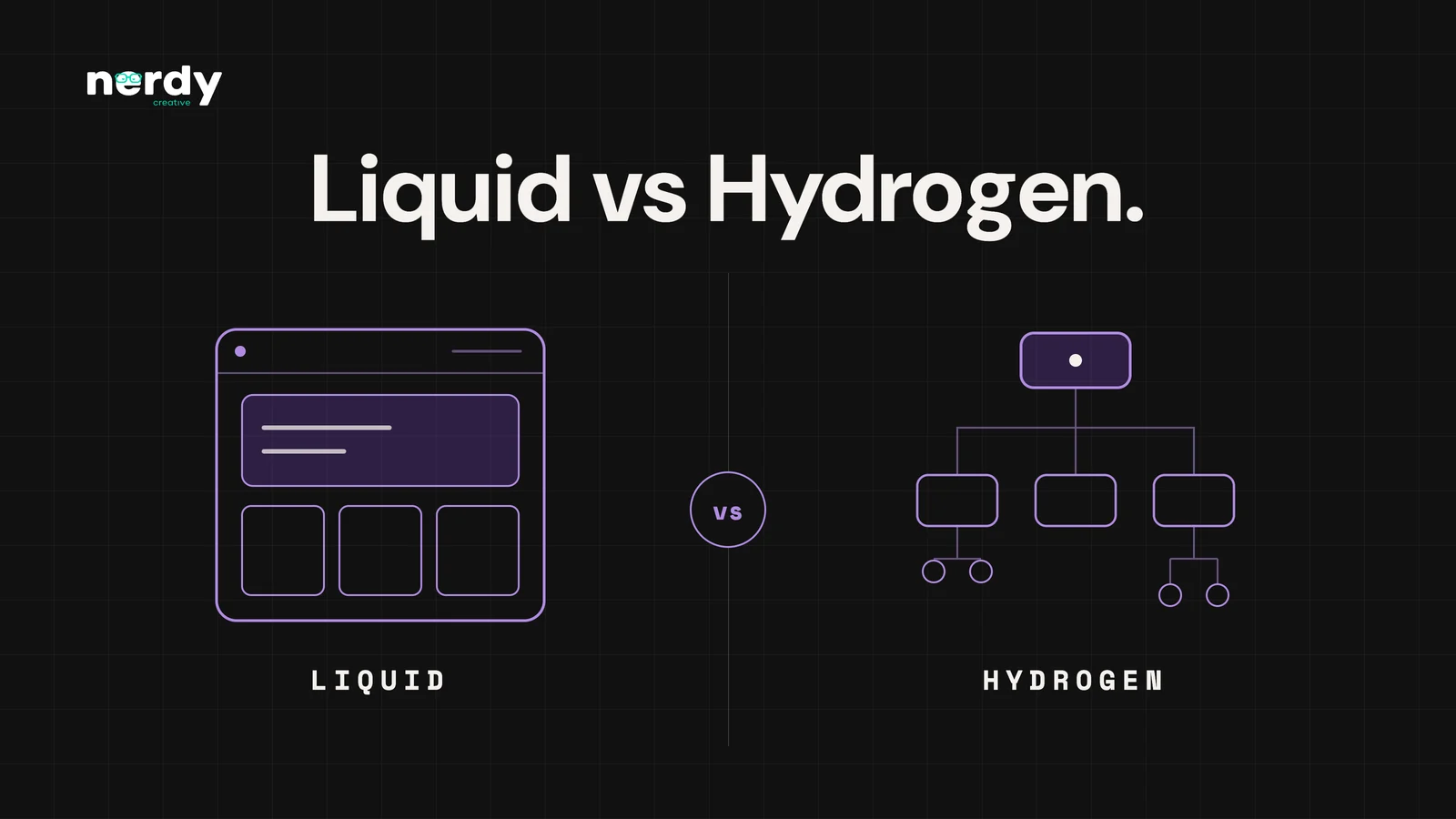
It’s one of the most common questions we get from brands and agencies planning a serious Shopify build: should we go headless with Hydrogen, or build a traditional Liquid theme? Headless has a certain gravity to it, it sounds modern, flexible, future-proof. But the honest answer is that headless is powerful, and most stores don’t need it.
Here’s how we think about the decision, as a team that builds both.
What Liquid actually is
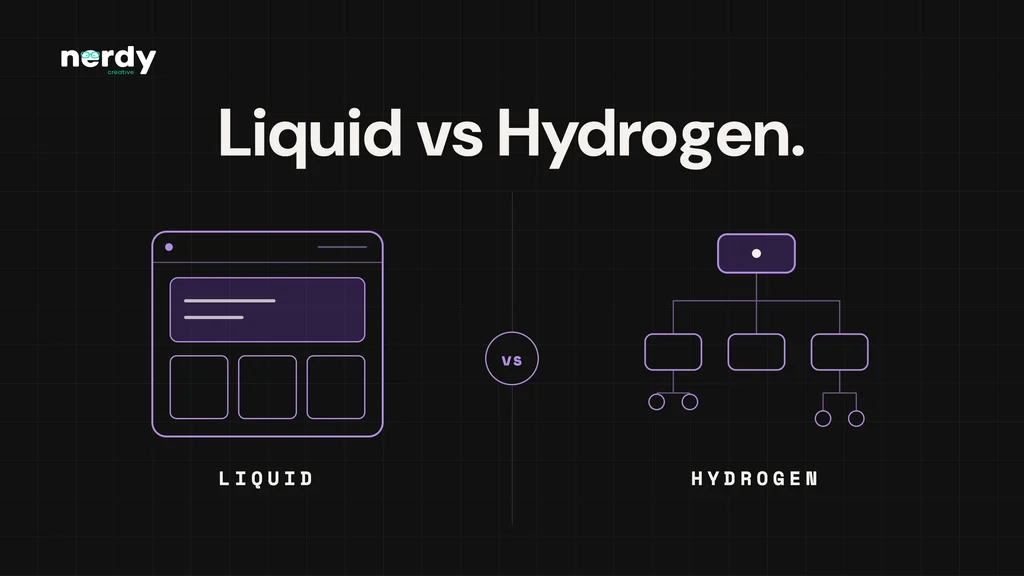
Liquid is Shopify’s traditional templating language. A Liquid theme is rendered by Shopify itself: the storefront, the templates, the logic all live inside the platform. With Online Store 2.0, Liquid themes became far more flexible, sections everywhere, metafields, and much more that merchants can control without a developer.
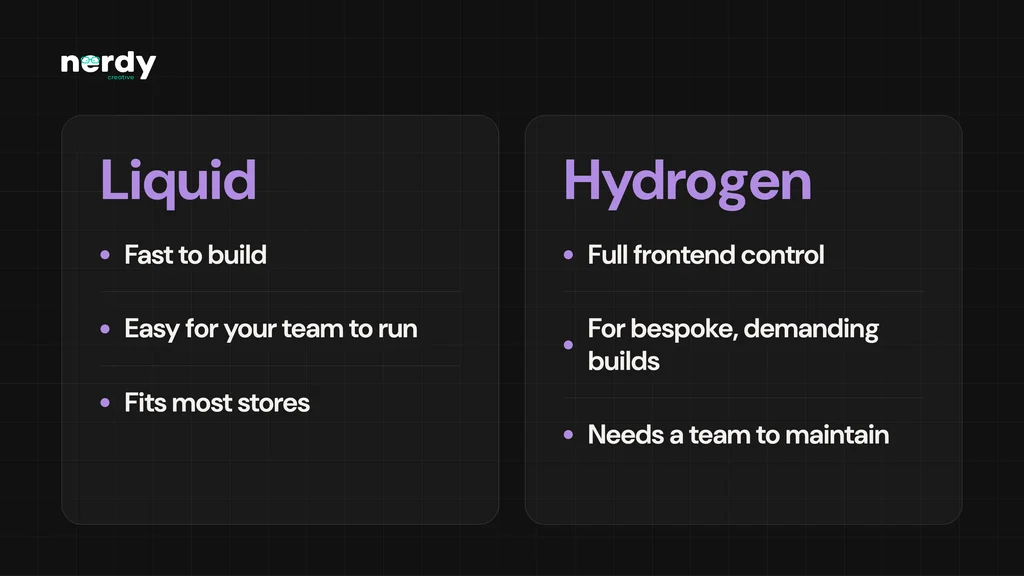
For the large majority of stores, a well-built Liquid theme does everything they need. It loads fast, it’s straightforward for the client’s team to run day to day, and it stays close to the platform, which means fewer moving parts and less that can break.
What Hydrogen (headless) actually is
Hydrogen is Shopify’s framework for building a headless storefront. “Headless” means you decouple the frontend (what the customer sees) from Shopify’s backend (products, cart, checkout), and build the frontend yourself, typically in React, pulling data through the Storefront API.
That gives you near-total control over the customer experience. You can build things a theme simply can’t, and shape the frontend exactly as you want it. For the right project, that control is genuinely valuable.
The real tradeoff
The tradeoff is this: headless gives you more power, and in return asks for more. More to build, more to maintain, more infrastructure, and more that can go wrong. A Liquid theme stays within a well-worn, well-supported path. A headless build is a custom application that your team, or a partner, has to keep running over time.
So the question isn’t “which is more powerful.” Headless usually is. The question is whether the power is worth the cost and complexity for your store.
When headless is worth it
Reach for Hydrogen when:
- The experience you want genuinely can’t be built on a Liquid theme. If you’ve hit real, hard limits, not just preferences, that’s a strong signal.
- You’re a larger brand with the resources to build and maintain a custom frontend long term.
- Performance or a highly bespoke, app-like experience is central to your strategy, and you have the team to support it.
In those cases, headless isn’t over-engineering, it’s the right tool for a genuinely demanding job.
When it’s overkill
Stick with a Liquid theme when:
- A well-built theme can deliver the experience you want. For most stores, it can.
- You want the store to be easy for your own team to manage, without specialist frontend developers on call.
- You’d rather put your budget into merchandising, content, and marketing than into building and maintaining custom infrastructure.
For a lot of stores, a clean Liquid build is the smarter call: less cost, less complexity, and the same result for the customer.
How to choose
Our rule of thumb is simple. Start by assuming a Liquid theme, because it’s the lower-risk, lower-cost option that fits most stores. Only move to headless when you have a concrete reason the theme can’t meet, and the resources to maintain what you build. Powerful and necessary are not the same thing, and the best choice is the one that fits the store you actually have, not the one that sounds most impressive.
If you’re weighing this decision for a real project and want an honest recommendation, not a push toward the more expensive option, that’s a conversation we’re happy to have. Get in touch.